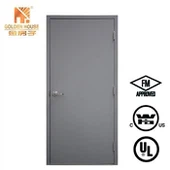
Being able to identify fire-rated doors is important to not only ensure that a building is up to code but also that any modifications to a door will not negate its fire rating. For example, if a fire-rated door is modified with non-fire-rated hardware, it will lose its fire rating. To identify a fire-rated door, a person must find on the door in question a fire label from an approved testing agency. Two common agencies are Underwriters Laboratories (UL) and Warnock Hersey (WH). A local Authority Having Jurisdiction (AHJ) can also help provide names of other approved agencies. To find these labels, there are a few places a person can look.
Understanding the basics of fire-rated door labels
A fire label is often located on the hinge side of a fire-rated door, but it can also be located on the top or bottom of a door as well. These labels might be painted over, so be sure to check for any raised surfaces. If these labels are not found, the door is most likely not fire rated (but always reach out to an AHJ for clarification). If a credible label is there, then it is a fire-rated door.
If a fire-rated door is being modified, it is critical to confirm that any component modifications meet the testing requirements and criteria stated on the fire-rated door label. This includes the fire rating and type of fire protection the door provides (e.g. fire protection or fire resistance).
Fire-rated glass door labels
Today’s fire-rated doors frequently incorporate glazing to promote visibility and daylight. Since the glass itself promotes fire- and life- safety functions, it is also crucial to have an understanding of where to locate and how to read fire-rated glass door labels. Most often, these labels are etched into the bottom of the glass in the right or left corner. However, because it is important for them to be easily seen by first responders, they may be in an upper corner when needed.
Fire-rated glass labels include a range of information, including the product name, basic characteristics (e.g., tempered, laminated, etc.), compliance with impact safety requirements, and listing information for the applicable independent testing agency.